Tiny bathroom, endless bottles? You can learn how to organize a small bathroom by keeping only daily items inside, giving each category a zone, and using clear containers, doors and the space under the sink.
This guide is part of the home organization guide, which covers the other rooms of the house.
| Item | Value |
|---|---|
| Mascara lifespan, as short as | three to four months |
| Product with the number six on its open-lid tub symbol | six months once opened |
| Best spot for everyday skin care | eye level, on a shelf or in a medicine cabinet |
| Cotton rounds and tips | bottom shelf, in clear containers |
| Bath linen | mostly stored outside the bathroom |
These points come from Real Homes and Homes & Gardens. Figures can change, so check the sources before you rely on them.
Start by deciding what belongs in the room
A small room cannot hold everything, so the first job is a firm rule. Homes & Gardens describes the fundamental principle as keeping only what is key to the activities that take place in the bathroom, as laid out in its small bathroom guide.
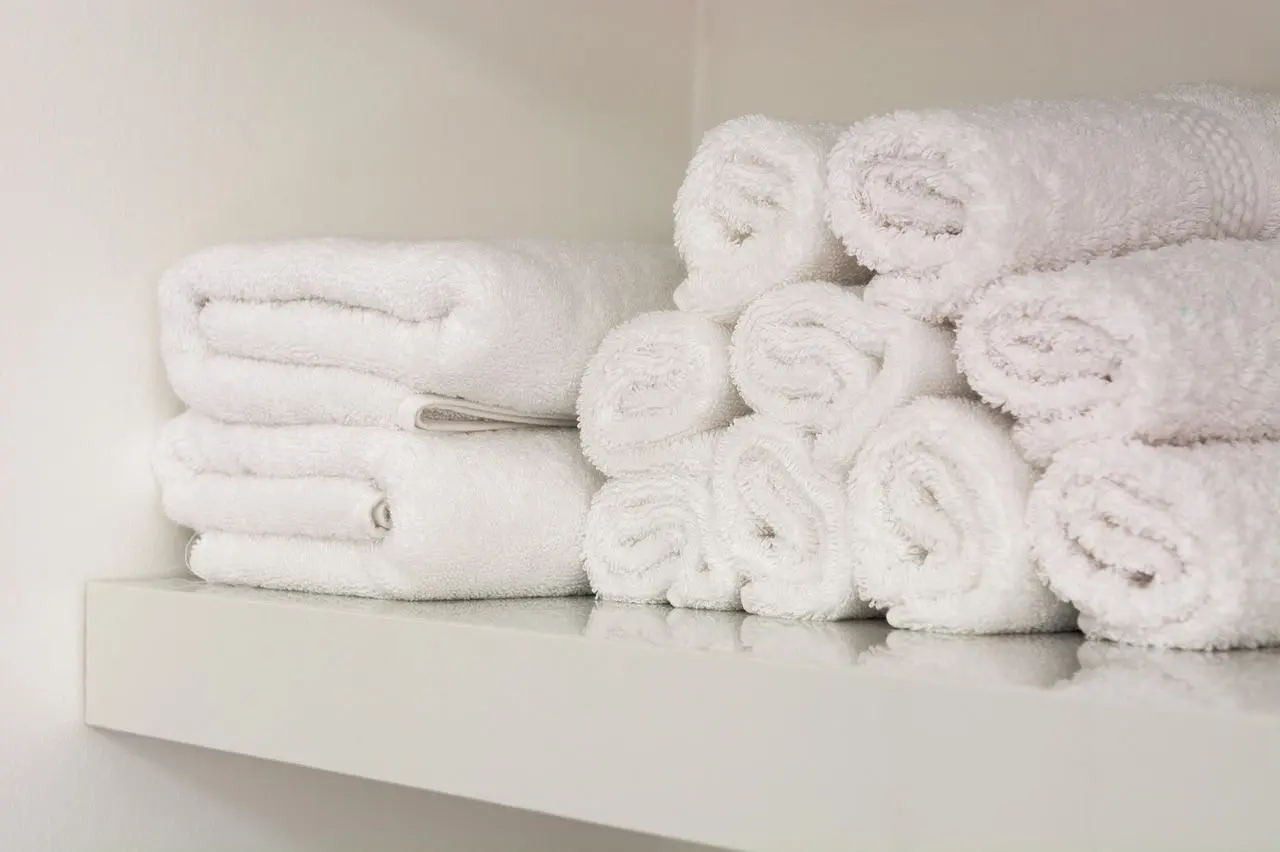
That guide also suggests most of your bath linen lives elsewhere, such as a linen closet in another part of the house, with just a few towels kept in the bathroom itself.
Next, look at dates. Homes & Gardens says makeup, face lotions and body lotions have a limited life, as short as three to four months for mascara. Real Homes adds that an open-lid tub symbol on the back of a product, with a number beside it, tells you how long it lasts once opened: a six means six months.
Real Homes also notes that clearing out old products matters most in small bathrooms, because even a little clutter is magnified there. Sort what is left into three piles:
- Keep in the bathroom: washing and grooming products, toothbrushes, toilet paper and a few towels.
- Move out: spare linen, bulk supplies and anything you rarely touch.
- Let go of: expired products and empty bottles.
Receipts, appliance manuals and other loose papers do not belong on bathroom shelves either, and the guide on how to organize paperwork at home shows where they can go instead.
Zone the room by what you do there
Even a tiny room works better when it is split into zones. Homes & Gardens places toothbrushes near the basin, makeup and razors near the mirror, fresh towels by the bath, and bath salts and oils by the tub.
The same source says to keep those bath products off the side of the tub, which keeps the edge clear and the room calmer to look at.
Under the sink, Real Homes quotes organizer Caroline Solomon advising you to group like items, such as hair care, body care and travel products, in clear, stackable drawers. Frequently used skin care goes at eye level, while disposable items like cotton rounds sit on the bottom shelf in clear containers.
How do you organize drawers and the space under the sink?
Begin by emptying the drawer or cabinet completely. Livingetc recommends taking everything out, then grouping it by category and reviewing what you own before anything goes back in.
Containers do the heavy lifting from there. In the same piece, organizer Ben Soreff says deep cabinets create black holes, while containers keep items from disappearing, and that clear bins are the best choice for drawers because you can see what you are looking for.
Shallow storage helps too. Interior designer Deana Ashby, quoted by Homes & Gardens, says narrow-depth drawers, or shelves set closer together, let you see everything at a glance instead of rooting around at the back.
Useful tools for the sink cabinet include:
- Drawer dividers and small clear containers to corral loose items.
- Stackable bins that use the height under the sink, as Homes & Gardens suggests in its must-have list.
- A grip lining on the drawer base, so contents stop sliding about each time you open it, per Livingetc.
Where can extra storage hide in a small bathroom?
The back of the door is often wasted. Livingetc calls it dead space you can use for everyday bits and pieces, and Homes & Gardens says an over-the-door unit is especially helpful when your vanity has no drawers or shelves.
If you have already worked out how to organize an entryway, the same hook-and-basket thinking carries over neatly to a bathroom door.
Look at the floor plan, too. Organizer Amy Bloomer, quoted in the Homes & Gardens must-have list, points out that there is often a small usable gap between the vanity and the toilet, which suits a narrow cart on wheels.
A trash can can make a room feel messier than it is. Livingetc quotes designer Samantha Struck suggesting you keep it inside the sink cabinet if you can, because the less you have out in a small space, the better.
A simple order of work
If you would rather follow a sequence than a list of ideas, this order keeps you from buying containers before you know what you own.
- Empty one drawer, shelf or cabinet at a time and group everything by category.
- Throw out expired products and move spare stock and extra linen out of the room.
- Assign each category a zone near where you use it.
- Put daily items within easy reach and less-used items higher up or further back.
- Only then add bins, dividers, hooks or a cart sized to what is left.
- Recheck whenever you restock, so the room does not slowly refill.
Frequently asked questions
Where should I keep the products I use every day?
Show answer
Choose a spot you can reach without bending or rummaging. Real Homes points to a medicine cabinet or a shelf at eye level for your most-used skin care.
What if my bathroom has no cabinet at all?
Show answer
Lean on the door, the floor gap and containers. An over-the-door organizer and a slim rolling cart, both covered by Homes & Gardens, add storage without any built-in furniture.
How many towels should stay in a small bathroom?
Show answer
Only a few. Most spare linen can sit in a hall or bedroom closet, a point Homes & Gardens makes when it talks about being strict with the room’s contents.
How can I tell whether a product has expired?
Show answer
Look on the back for the open-lid tub symbol described by Real Homes, where the number shows how many months the product lasts after opening. Texture changes or a strange smell are also signs it may be time to toss it.