Wondering how to choose a rug size without regretting it? Pick one big enough that at least the front legs of your seating rest on it, and tape the outline on the floor first.
This guide sits within our wider look at interior design basics, which covers the fundamentals that make a room feel finished.
| Item | Value |
|---|---|
| Floor border when all living room furniture sits on the rug | 12-18 inches |
| Minimum rug extension past a dining table edge | 24 inches |
| Most common rectangular dining room rug | 8′ x 10′ |
| Rug for a typical four-seater round table | 8′ x 8′ round |
| Margin of error when measuring a taped outline | 2 inches |
These figures come from This Old House’s rug sizing guide and Homemade Lovely’s area rug size guide. Recommendations can change and designers differ, so check the sources before you rely on them.
Standard rug sizes and what each one suits
Most rugs are sold in a handful of standard sizes, so it helps to know the range before you start measuring. This Old House lists these common options and the spaces they suit:
- 2′ x 3′: small entryways or accent rugs
- 3′ x 5′: compact spaces or layering rugs
- 5′ x 8′: smaller living rooms or bedrooms
- 8′ x 10′: medium-sized living rooms and bedrooms
- 9′ x 12′: larger living rooms and open-concept spaces
- 12′ x 15′: spacious rooms, or defining areas in open floor plans
Standard sizes are the easiest to find, but Homemade Lovely points out that other sizes exist too. Use the list as a starting point rather than a rule.
How do you measure for a rug?
The most reliable method is to tape out the rug before you buy. This Old House recommends outlining different rug size options on the floor with painter’s tape, so you can see how each one sits in the room.
- Measure the room’s length and width and note which furniture will stay.
- Arrange your furniture the way you want it to sit.
- Mark possible rug boundaries on the floor with painter’s tape.
- Check traffic patterns: the rug should allow easy movement without awkward transitions between flooring surfaces, according to This Old House.
- Measure the taped rectangle, add 2 inches for a margin of error, and compare it with standard sizes, as Homemade Lovely suggests.
If your furniture floats in the middle of the room, leave 8-18 inches of bare floor around the edges for traffic flow and looks, says Homemade Lovely.
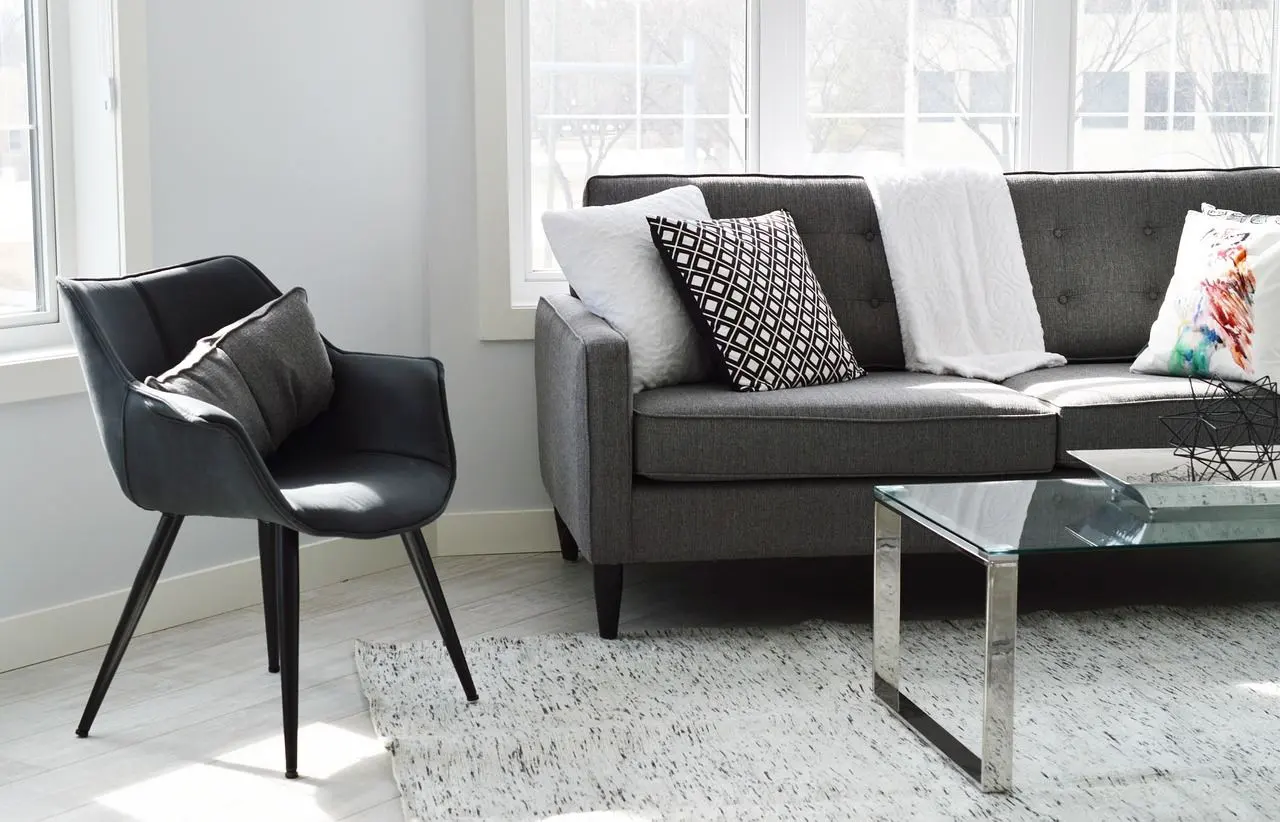
Taping also works when the room is awkward. Moving the tape lets you test shapes and sizes at no cost before you commit.
Living room layouts that work
Your furniture arrangement decides the rug size more than the room does. This Old House describes several layout options, and these three are the most common:
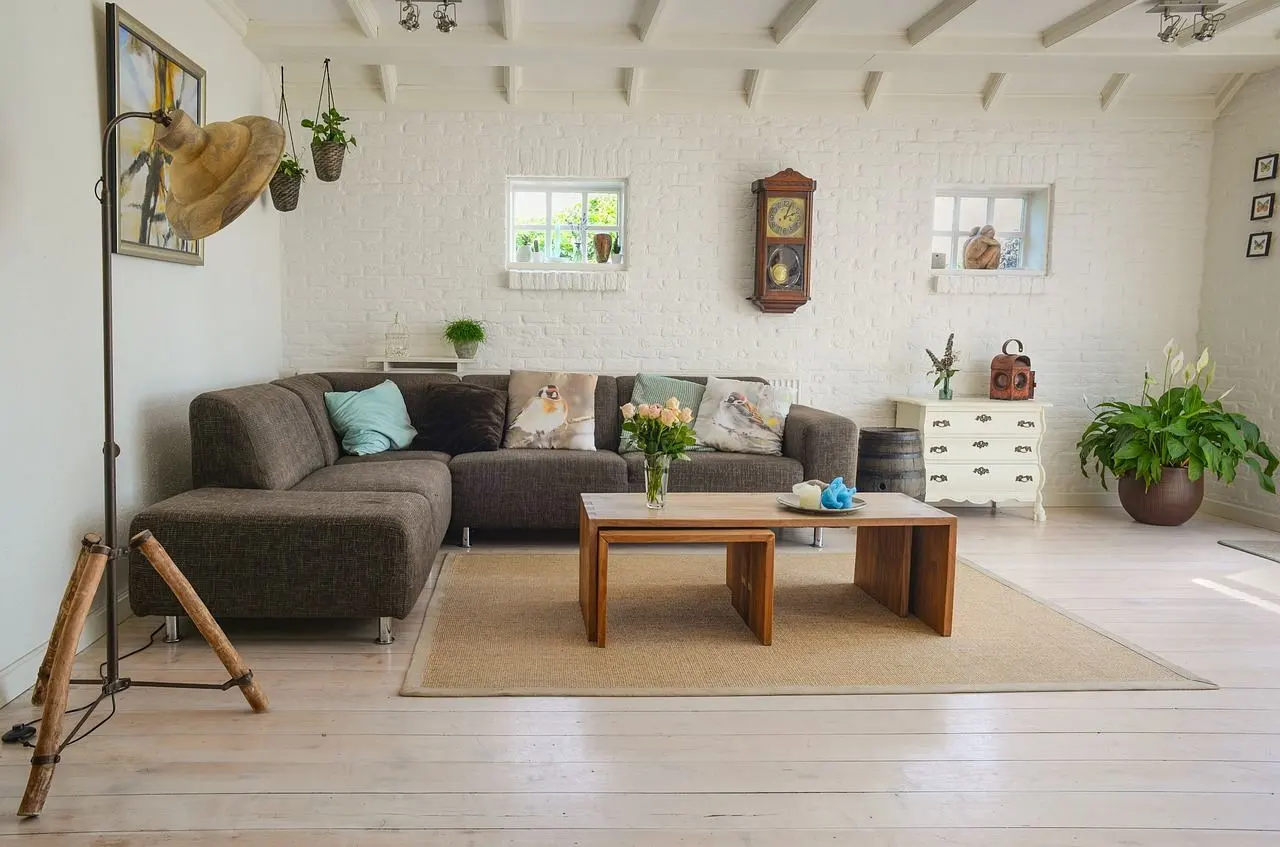
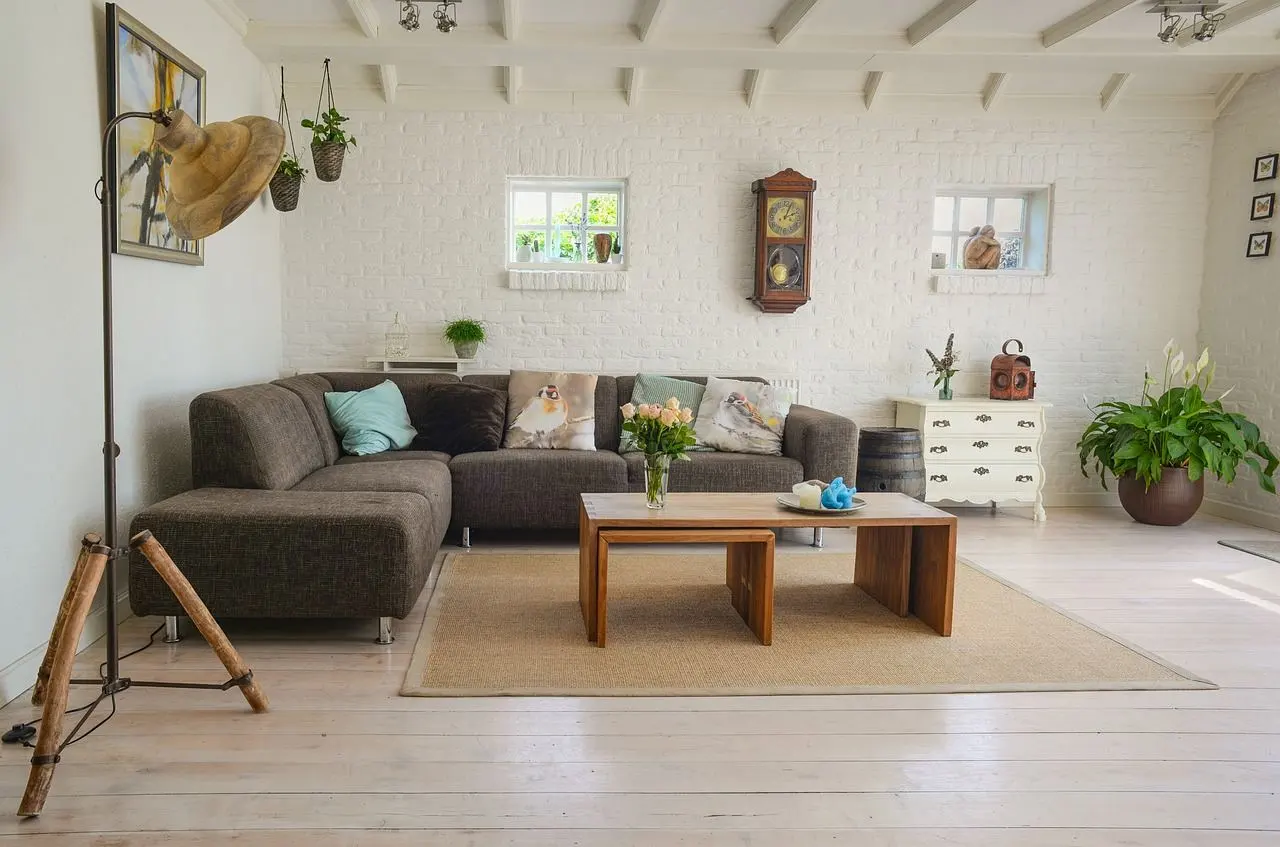
- All furniture on the rug: a large rug that leaves 12-18 inches of floor space around the perimeter (This Old House).
- Front legs on the rug: a medium-sized rug that the front legs of all seating rest on, which creates a cohesive look.
- Floating rug: for smaller spaces, a rug that fits within the seating area with every furniture leg off it.
For the front-legs layout, Homemade Lovely says a 5′ x 7′ rug could work if your furniture is on the smaller side, as long as you measure to confirm every front leg lands on it. It is less keen on the floating option: a rug should not stop short of the front feet of the arrangement or sit alone under a coffee table.
If you want a border of flooring all the way around, Homes & Gardens quotes designer Stacey Dobrovolny, who says it can leave between 8 to 24 inches. That approach needs a fully custom rug that a custom rug company measures, cuts, binds and installs.
In a larger family room, This Old House also suggests multiple rugs to define different activities, such as a play area for children or a reading nook.
Dining room: how far should the rug extend past the table?
The goal is that chairs stay on the rug even when someone pulls them out. This Old House advises measuring your table and adding 24-30 inches on all sides, and it says the rug should extend at least 24 inches beyond the table’s edge so chair legs do not catch.
Designers phrase the minimum a little differently. Homes & Gardens quotes Sarah Thurston allowing 24 inches past the table edge as a minimum, while Stacey Dobrovolny leaves approximately 18 to 24 inches around the whole table for the chairs.
Dobrovolny adds that a larger room might take a slightly larger rug, as long as it does not run right up against a buffet or sideboard (Homes & Gardens).
For ready-made sizes, Homemade Lovely reports that the most common rectangular dining room rug is 8′ x 10′, and that anything smaller risks chairs sitting off the rug. With a typical four-seater round table, it suggests an 8′ x 8′ round rug unless the table is oversized.
Bedrooms and smaller spaces
Bedrooms give you three workable approaches, all described by Homemade Lovely:
- Everything on the rug: the rug is a little smaller than the room in both directions, so only a border of bare floor shows around the edges.
- Partly under the bed: the rug peeks out from under the bed, more so at the foot. For anything larger than a twin bed, turn the rug so its longer side runs parallel to the head and foot of the bed.
- Beside the bed: a budget-friendly option, such as a 3′ x 5′ runner or something longer on each side.
Whichever you choose, tape the outline first, just as you would in a living room. A rug that looks right on paper can feel crowded once the bed and nightstands are in place.
Mistakes to avoid and what to do next
The most common error is going too small. Homemade Lovely says people usually misjudge scale, or pick a smaller rug because it costs less.
A wrongly sized rug can also detract from the room’s style, fail to do its job and even become a trip hazard, according to Homes & Gardens. This Old House adds that settling size and style early gives you a palette to build around with furniture, accents and wall color.
Once the rug is settled, you can plan how to layer lighting in a room around the seating area it defines.
Windows come next, and this guide shows how to hang curtains correctly so they frame the room alongside your new rug.
Frequently asked questions
Should every piece of furniture sit on the rug?
Show answer
No. Homemade Lovely calls it very acceptable to use a rug just large enough for the front legs of the major pieces, with most accent pieces left off it.
What if my room has an unusual shape?
Show answer
Odd dimensions and unique layouts make sizing harder, This Old House acknowledges. Test several taped outlines, or consider separate rugs for separate zones.
Is a bigger rug always the better choice?
Show answer
When you cannot decide between two sizes, Homemade Lovely says it is almost always best to choose the larger one. It also notes that budget is often what pushes people toward a rug that ends up too small.
Do rugs only come in standard sizes?
Show answer
Not at all, although standard sizes are the most readily available, per Homemade Lovely. A custom rug maker can also allow for features such as floor vents, Homes & Gardens reports.