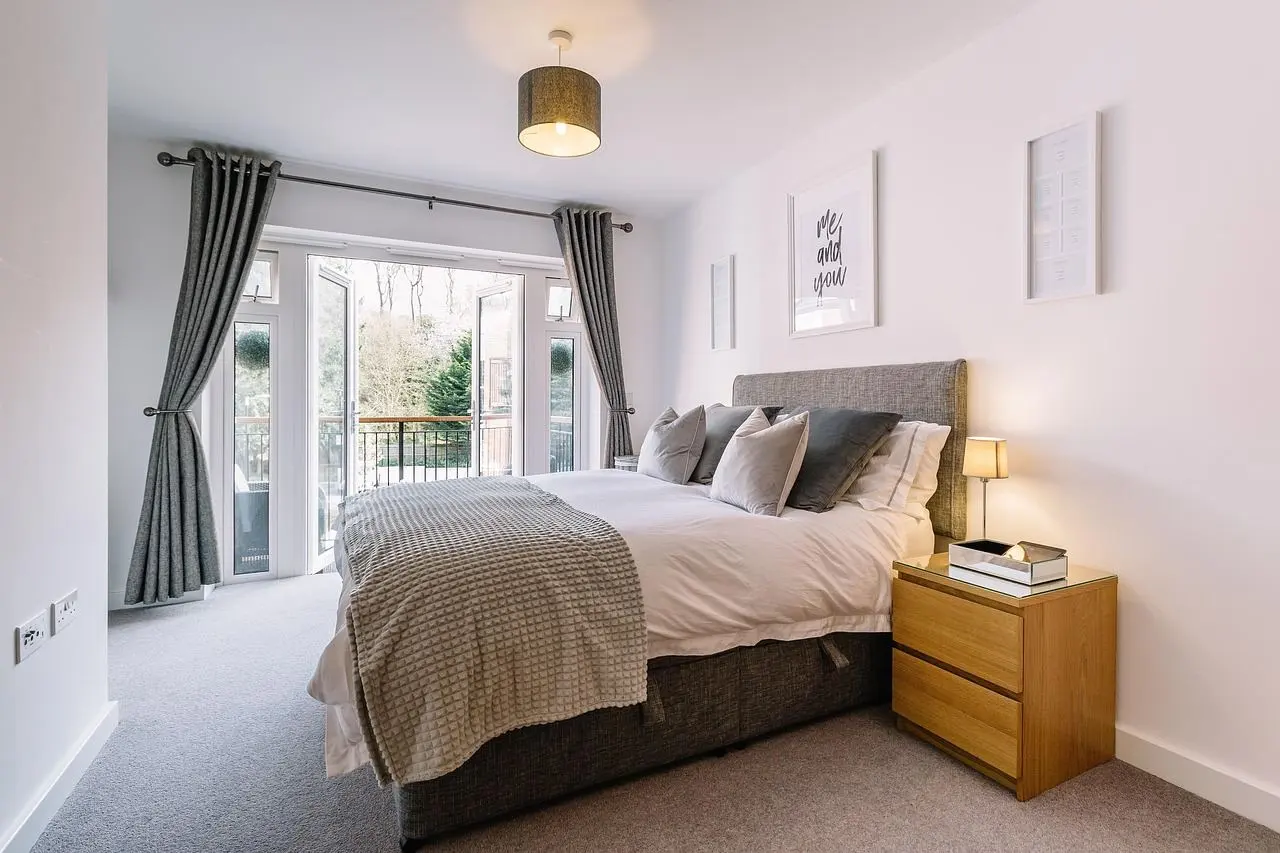
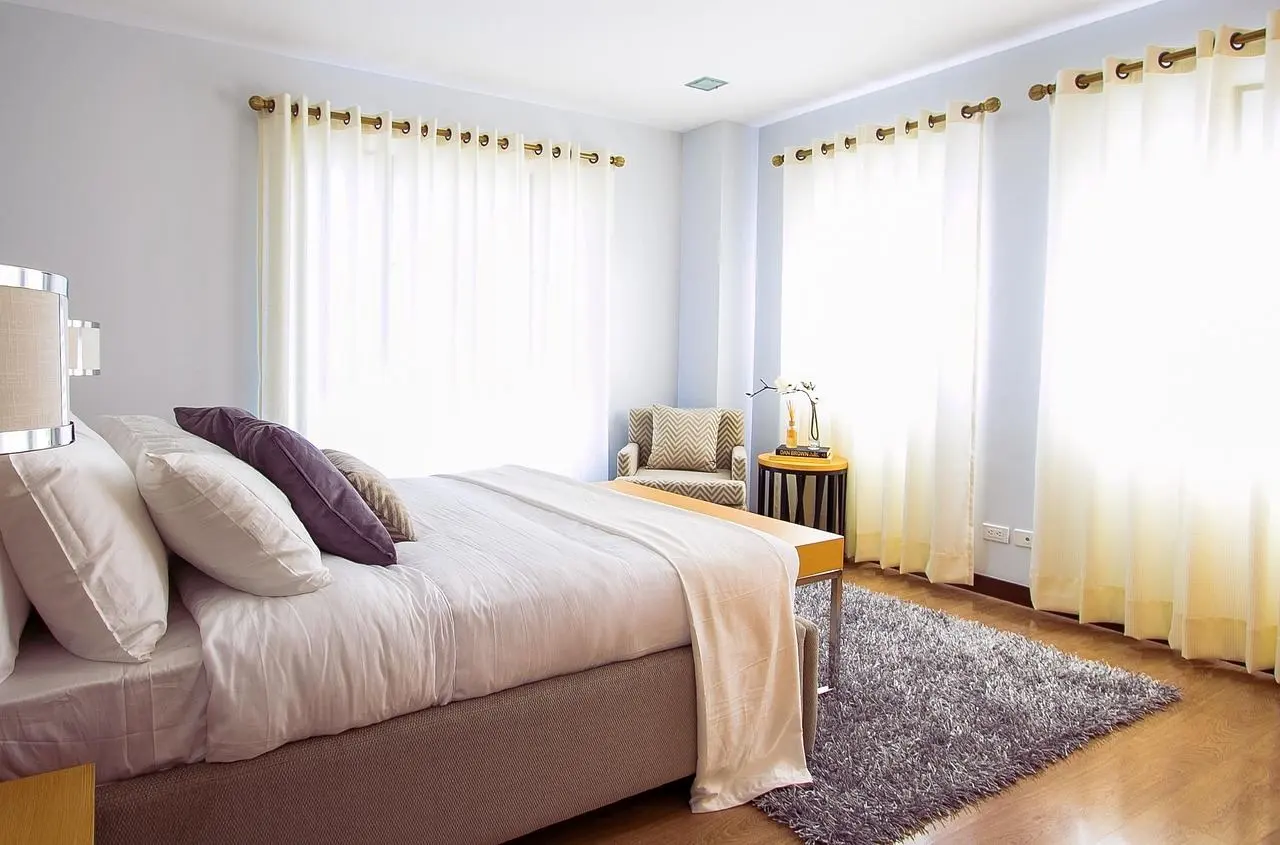
Worried your curtains will look off? Here is how to hang curtains correctly. Mount the rod a few inches above the frame, extend it past the trim, and let panels fall just above the floor.
This guide sits within the interior design basics collection, where each page covers one decision at a time.
| Item | Value |
|---|---|
| Typical rod height above the window frame | 4 to 6 inches |
| Highest advised rod position above the window frame | 8 inches |
| Rod extension for partial window coverage | 2 to 5 inches per side |
| Rod extension for maximum natural light | 8 to 15 inches per side |
| Rod length that needs a center bracket | Longer than 4 feet |
| Standard floor-length panel heights | 84 inches, 95 inches, 108 inches and 120 inches |
These figures come from Hunker and This Old House. Guidance and product sizes can change, so check the sources before you rely on them.
Measure the window and pick a mounting style
Start by measuring each window on its own, even when several look identical. Take every dimension in three places and keep the largest figure, a step that Real Homes says matters most in older homes with handmade moldings.
Next, choose between mounting inside the frame or outside it. According to Real Homes, inside mounting keeps the curtain size down and shows off decorative moldings, while outside mounting suits frames you find unattractive or want to cover.
For a full, generous look, plan panels that are double the width of the window, a rule of thumb given by Real Homes.
How high should the curtain rod go?
Most guides settle on 4 to 6 inches above the window frame, and Hunker uses that range. This Old House puts the usual spot at about 4 inches and adds that many people go higher to make the room feel taller.
Pick the rule that fits your wall:
- Standard: sit the rod 4 to 6 inches above the frame, the range Hunker calls typical.
- Taller look: Bob Vila says to mount the rod closer to the ceiling for the illusion of height, while Hunker advises no more than 8 inches above the top edge of the window.
- Halfway rule: hang the rod midway between the ceiling and the top of the frame, a method Hunker says is unsuited to extra high ceilings or a large gap above the window.
With limited space under the ceiling, Taskrabbit advises leaving enough clearance for the brackets, finials and curtain hardware. Hold a panel against the wall before you commit, so you can see where the fabric will land.
How wide should the rod be?
Rod width decides how much glass the curtains cover when open. This Old House says to add 2 to 5 inches to each side of the frame for partial coverage, or 8 to 15 inches to each side to let in the most light.
Other sources give slightly different ranges:
- At least 1 to 3 inches beyond the trim for full coverage, per Hunker.
- At least 6 inches past the trim on both sides, as a designer quoted by Real Homes recommends.
- Up to 10 inches beyond the outer trim if you want the window to look wider, again from Hunker.
Leave extra wall space for the finials, as Bob Vila reminds readers. If furniture crowds the wall beside the window, a look at how to style a bookshelf can help you decide what shares that space; see how to style a bookshelf for ideas.
Choose the curtain length before you drill
Work backward from the hem. Taskrabbit recommends deciding where the hem should land first, then choosing the rod position, rather than picking a height and hoping the panels fit.
Ready-made floor-length panels come in standard heights of 84 inches, 95 inches, 108 inches and 120 inches, according to This Old House. A higher rod may call for a longer panel than you expected.
Bob Vila describes three common endings:
- Grazing: panels that just touch the floor or sill look classic and tailored.
- Slight break: a break of one to three inches at the floor is also on trend.
- Puddled: allow six to eight extra inches of fabric for a very formal look.
The heading style matters too. Hunker notes that curtains with rings, hooks or tabs hang lower than the rod, while grommet or pocket headers sit even with it.
Floor-length hems end close to the rug, so it helps to know how to choose a rug size before you fix the final length.
Install the brackets and hang the rod
Do a test run first. Hunker suggests sliding the curtains onto the rod and having someone hold each end up to the window while you judge the look.
- Mark the bracket positions with a pencil and make sure both sides are level, as Real Homes directs.
- Use a stud finder to locate the stud beside the window. If your marks miss a stud, This Old House says to install wall anchors before mounting the brackets.
- Cut a cardboard template to fit the top corner of the frame, so both sides match. This Old House calls it a quick and helpful trick.
- Predrill the pilot holes, then fit the anchors and tighten each bracket until it sits flush, following Bob Vila.
- Add a center bracket for any rod longer than 4 feet to stop sagging, per This Old House.
- Thread on the curtains, rest the rod in the brackets, add the finials and tighten the set screws.
Follow the hardware maker’s instructions for your rod and brackets. If you are unsure what is behind the wall, or the curtains are very heavy, ask a qualified professional before you drill.
Frequently asked questions
What if my panels are too short for the rod height I want?
Show answer
Longer panels or custom-sized curtains may be needed when standard lengths do not suit your placement, as Taskrabbit points out. Check the hem position before you buy.
Do I need wall anchors even if the bracket hits a stud?
Show answer
Not always, but one designer quoted by Real Homes warns that you don’t want your rods coming out of the sheetrock. Anchors give extra security, especially for heavy fabric.
Will rings or tabs change where the hem ends up?
Show answer
Yes, the attachment style can change the finished drop. Taskrabbit tells readers to check the curtain maker’s measurement guidance before fixing the final rod height.
Is puddling a good idea in a busy room?
Show answer
Usually not. Taskrabbit says pooled fabric may need more frequent cleaning and is less practical where curtains open and close often.