Cabinets that swallow the things you need every day are frustrating. Here is how to organize kitchen cabinets: empty them, keep only what you use, and store each item near where you use it.
For the bigger picture across every room, see the home organization guide.
| Item | Value |
|---|---|
| Hand test for easy access | 1 hand |
| Maximum distance from where an item is used | 2 steps |
| Time to put an item away | 3 seconds |
| Expert tips in the Homes & Gardens guide | 6 tips |
The figures come from the Homes & Gardens guide to kitchen traffic flow. They are one organizer’s rule of thumb and the guide can change, so check the source before you rely on them.
Start by emptying and decluttering every cabinet
Take everything out of one cabinet at a time. It is hard to judge what you own when half of it hides behind something else, and an empty shelf is easy to wipe down and inspect.
The Public Storage organizing guide notes that emptying the cabinet also gives you a chance to wipe down the shelves and inspect the contents. Group similar things together as they come out, so duplicates show up straight away.
Then decide what goes back. Look for these usual suspects:
- Duplicate utensils and gadgets you forgot you owned
- Chipped dishes and mugs nobody uses
- Food storage containers without matching lids, and lids without containers
- Expired food and old spices
- Broken appliances
Donate or give away what is still usable, and dispose of damaged items following your local guidelines. The Homes & Gardens guide likewise advises removing items that are rarely or no longer in use so the essentials take priority.
Group items into zones near where you use them
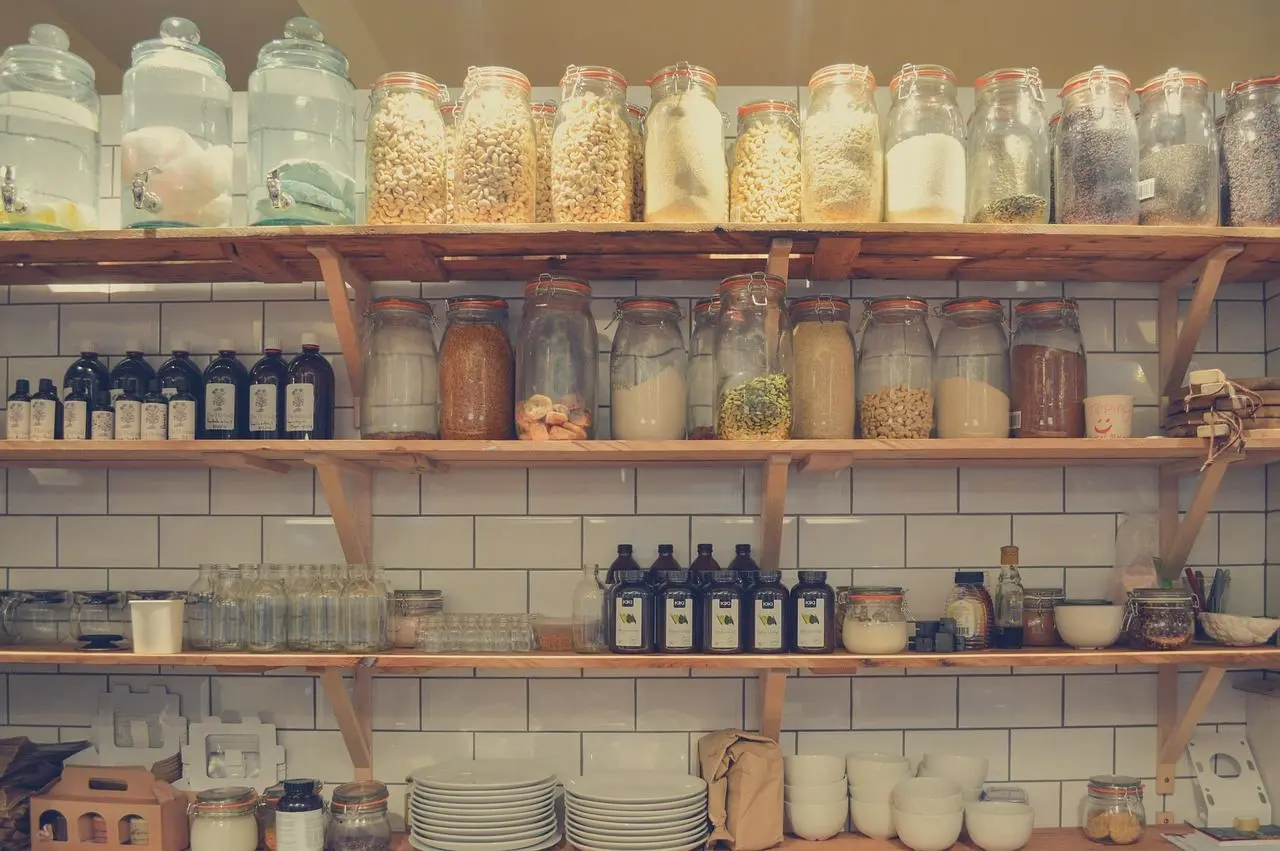
Instead of filling cabinets wherever there is space, build zones around tasks. Typical zones are everyday dishes, glassware, coffee and tea, baking, food storage, spices, and pots and pans.
Then place each zone close to the place it serves. According to the Public Storage guide, coffee supplies can go near the coffee maker and everyday dishes near the dishwasher to make unloading easier.
Cooking and prep follow the same logic. Organizer Sarit Weiss, quoted by Homes & Gardens, advises keeping pots, pans and cooking utensils near the stove. Chopping boards and knives belong in the prep area, and a cutlery drawer makes sense near the dishwasher or sink.
A good zone plan also helps when two people cook at once, because fewer trips across the room means fewer collisions.
How does the 1-2-3 rule decide where things go?
Organizer Amanda Liford, quoted by Homes & Gardens, recommends the 1-2-3 rule for deciding where each item lives. You ask three questions about every item.
- Can you get it and put it away with 1 hand?
- Is it 2 steps from where it’s used?
- Does it take 3 seconds to put away?
These three questions come straight from the Homes & Gardens guide. Her example: cups sit two steps from the fridge, but not so high that you need a stool, because that would take more time to put them away. If your coffee maker is in a different part of the kitchen, she suggests separating coffee mugs from your other cups.
Items that fail the test are candidates for a different shelf, a different cabinet, or the donation bag.
Make each cabinet work harder with vertical and pull-out storage
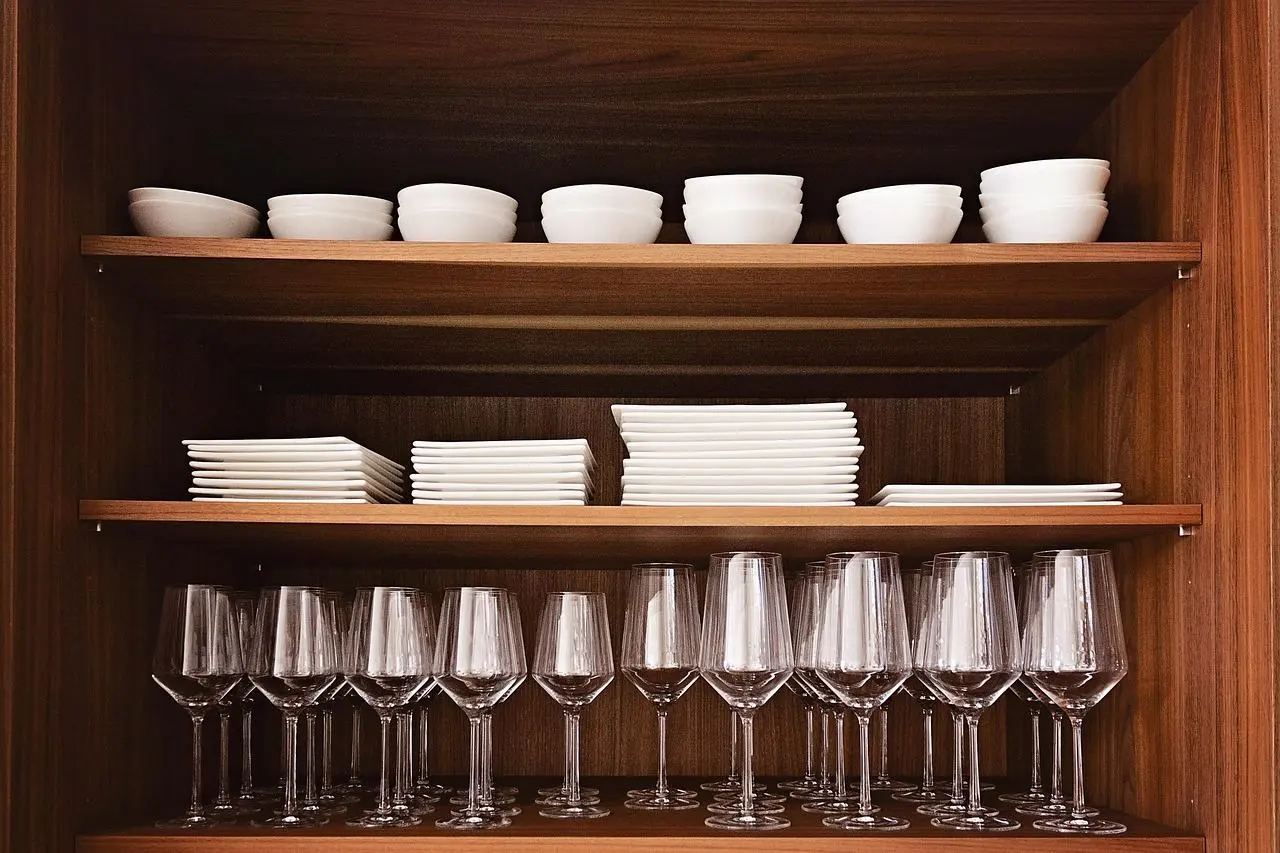
Once the right things are in the right cabinets, fix how they sit inside. The Public Storage guide suggests shelf risers to use empty vertical space, which is handy when shelves are not adjustable and a short stack of plates leaves a lot of air above it.
Several other fixes from the same guide are worth a look:
- Stand flat items on their edges. Baking sheets, cutting boards and lids on their sides instead of stacked means you can pull out one without moving the rest.
- Use a turntable. A lazy Susan makes a deep cabinet easier to use because you do not have to move the front items to reach the back.
- Add pull-out organizers. They bring the back of a deep lower cabinet to you.
- Use clear bins. Clear containers make it easier to see what is inside without pulling everything out.
Weight matters too. The guide says to store heavy cookware in lower cabinets, where it is easier to lift, and to put the plates and bowls you use constantly on lower cabinet shelves.
Measure before you buy organizers
Buying bins first is a common mistake. The Public Storage guide says to measure cabinets before buying bins, drawers, racks or other organizers, and to account for hinges, plumbing, cabinet frames and other obstructions.
If a pull-out unit or door rack needs drilling or fixing to the cabinet, follow the manufacturer’s instructions, and use a qualified professional for anything involving plumbing or structural work.
Once the cabinets work, the same zone thinking carries over to rooms nearby, in our notes on how to organize a pantry and how to organize a small closet. Both rely on keeping daily items easy to reach.
Frequently asked questions
Where should I start if every cabinet is a mess?
Show answer
Pick the cabinet you open most often and finish it completely before moving on. A visible win makes the rest feel manageable.
Should heavy pots go high or low?
Show answer
Low. The Public Storage guide recommends keeping heavy cookware in lower cabinets because lifting it from there is easier and safer than reaching overhead.
Do I need to buy organizers?
Show answer
Not at first. Declutter and regroup, then see what still bothers you. If something does, measure the space before you buy anything.
How do I keep the cabinets organized afterwards?
Show answer
Return items to their zone each time, and re-check a cabinet when it starts to feel crowded. Zones near the place of use make putting things away the easy option.