If your clothes spill out of a tiny closet, you’re not alone. Learn how to organize a small closet by editing what stays, zoning what’s left, and using every vertical inch.
Closets are one corner of a bigger system, so our home organization guide shows how the same habits carry through every room.
| Item | Value |
|---|---|
| Seasonal clothing rotation | Every few months |
| Declutter session size | One small area at a time |
| Time unworn before letting go | A year or more |
| Extra hanging space | An extra rod |
| Folding method for clothes that won’t crease | Folded vertically in drawers |
These figures come from Livingetc’s small closet guide and Real Homes’ tiny apartment closet advice. They are expert rules of thumb that can change, so check the source before you rely on them.
Edit first: decide what earns a place
Every storage trick works better with fewer items, so start by decluttering. Take everything out so you can see it all at once, then wipe the shelves and rails and vacuum the floor, as Homes & Gardens advises in its closet guide.
Keep the job small. Livingetc recommends you tackle one small area at a time, such as a shelf, a drawer or a section of hanging rail, because trying to do everything in one go is tiring and can be overwhelming.
As you work, sort each item into a simple pile:
- Rubbish for the bin bag
- Items to donate or give away
- Things that belong elsewhere in the home
- Pieces that need mending
Only the items you truly want to keep go back in. For borderline pieces, Real Homes quotes a professional organizer who says not to talk yourself into keeping things you haven’t worn in a year or more.
If the whole room needs a reset, our guide on how to declutter a room step by step covers the wider process.
Move out what doesn’t need to live in the closet
A small closet works best as a home for your current wardrobe. Homes & Gardens suggests keeping infrequently used items such as ski wear or hiking boots somewhere else, for example under the bed.
Good overflow spots are often already in your bedroom:
- Boxes under the bed or in a loft space, ideally with clothes packed in vacuum bags first
- A nightstand drawer, a storage trunk or the cabinet of a television stand
- Clear totes on a top shelf, in another closet or in a separate storage room
Vacuum bags suit bulky seasonal pieces. A professional organizer quoted by Real Homes says puffer coats and summer dresses can be stacked like books once they are packed.
Shoes are another space hog. A professional organizer quoted by Homes & Gardens says seasonal pairs in particular take up a lot of room, and suggests hallway shoe storage so they sit right by the door.
How do you use every inch of rod, shelf and door?
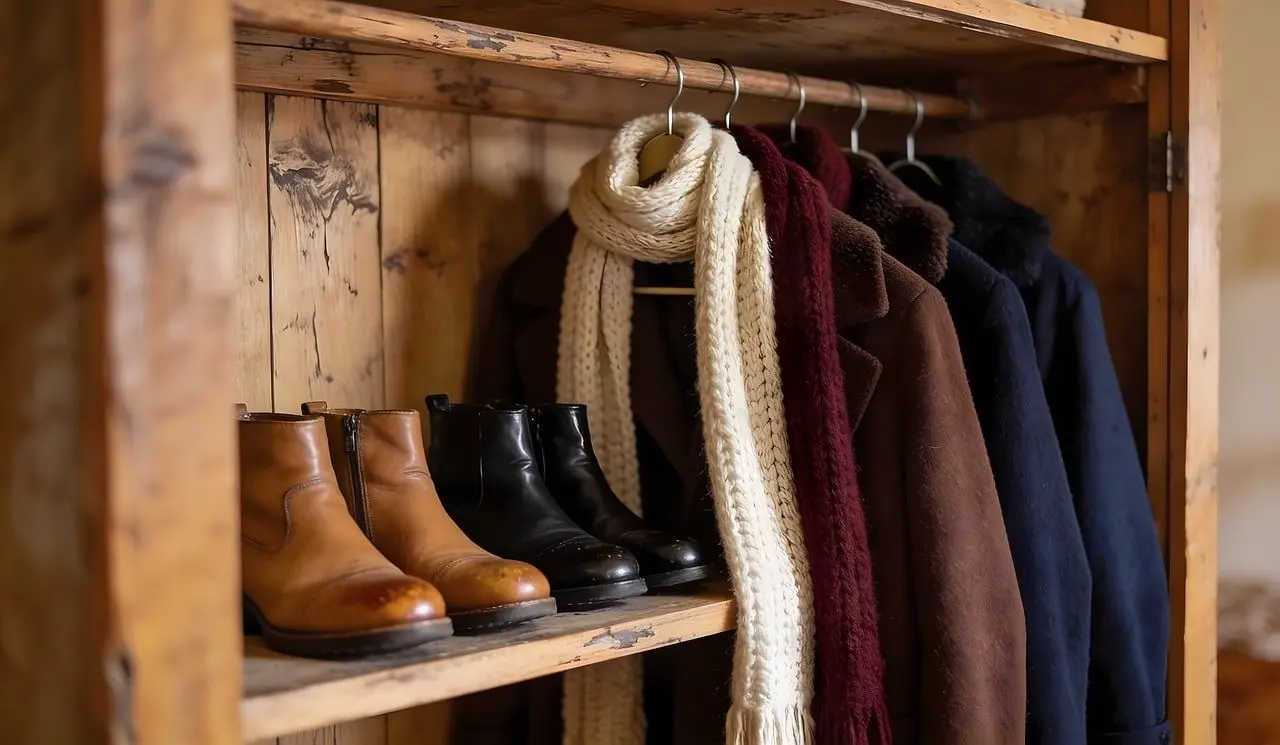
Start with what the closet already gives you. Homes & Gardens quotes an interior designer who suggests boxes for specific clothing when there is plenty of shelving, and multiple hanging rods when the wardrobe is very tall.
Then add vertical capacity in small steps:
- Add a rail: Livingetc says to do this if you have space under your hanging clothes but few long garments.
- Switch hangers: slimline hangers save a lot of space, though you should check sizes before ordering, and velvet multi-tier hangers let you hang several pairs of jeans together.
- Use the door: hooks on the inside of wardrobe doors work well, and an over-the-door organizer holds scarves, belts, socks or small purses.
- Use the walls: Real Homes suggests inexpensive hooks for bulky items or bags.
- Close the gaps: keep shelves close enough together that no height is wasted.
- Look up: if the wardrobe stops short of the ceiling, boxes can sit on top for occasional items.
Drawers help too. A mini dresser or stackable drawers can add storage inside a closet, and clothes that won’t crease can be folded vertically so you see every piece at a glance.
Zone the closet so everything is easy to find
Give every category its own zone. Homes & Gardens quotes a designer who keeps jeans together and separate from dress pants, which makes outfits quicker to assemble.
Position zones by how often you reach for them. The same source says to store your most used items toward the front, with less used pieces at the back and up high.
If you keep both seasons on the rail, split it: warm clothing on one side and cooler clothing on the other, an approach described in another Homes & Gardens guide.
Bins and baskets tame shelves, and the floor can take stacked shoe boxes if footwear must stay. The same front-to-back thinking is explained for another room in our guide on how to organize kitchen cabinets.
Common mistakes that make a small closet feel smaller
Most problems come from a few habits. Watch for these:
- Keeping everything: Homes & Gardens suggests finding extra storage nooks, such as a trunk or nightstand, to take pressure off the closet.
- Buying gadgets first: Livingetc’s organizer advice is to think carefully before ordering gimmicky inserts that may hinder rather than help.
- Skipping measurements: hangers and boxes that don’t fit waste the very space you are trying to gain.
- Expecting a perfect first try: every small closet has different shelving and hanging options.
On that last point, one organizer quoted by Homes & Gardens says it doesn’t have to be perfect the first time around, and that you should keep experimenting and tweaking until it works for you.
Frequently asked questions
What should go into a small closet first?
Show answer
Begin with the clothes you reach for in a normal week. Anything seasonal or occasional can wait in a trunk, under the bed or on a high shelf until you need it.
Is it better to fold or hang clothes in a small closet?
Show answer
Hang what wrinkles and fold the rest. Livingetc advises comparing what you fold with what you hang, since changing a habit can be more space-efficient.
How often should I swap seasonal clothes?
Show answer
Treat it as a recurring chore rather than a one-off project. Livingetc’s guide says to rotate your wardrobe every few months, moving out-of-season pieces under the bed or into a loft.
Do I need to buy special organizers?
Show answer
Not necessarily. A professional organizer quoted by Real Homes says her daughter’s very small closet gained a lifesaving amount of drawer space from a small thrift-store dresser.