Worried you’re drowning or starving your plants? How often to water indoor plants has no fixed answer: push a finger 2 inches into the soil and water when it feels dry.
If you’re starting out, the guide to home gardening for beginners covers the wider basics.
| Item | Value |
|---|---|
| Finger-test depth | 2 inches |
| Standing time for tap water, if needed | At least 24 hours |
| Saucer emptied after soaking | An hour or so |
| Fixed schedule for all indoor plants | None recommended |
| Most likely top killer of houseplants | Overwatering |
These figures come from Illinois Extension and Utah State University Extension. Extension guidance can change, so check the sources before you rely on the figures.
Why a fixed watering schedule rarely works
Many people want a calendar to follow, but Illinois Extension says that sticking to a schedule usually does not work. The better habit is to water when the plant needs it, not on a set day of the week.
Utah State University Extension agrees: there is no general watering schedule that suits every indoor plant. It also names overwatering as most likely the number one killer of houseplants.
Plant tags and care pages usually describe water needs in broad terms. Illinois Extension lists these typical descriptions:
- Plants that enjoy constantly moist, but not soggy wet, soil.
- Plants that prefer the soil to dry moderately between waterings.
- Plants that prefer very slightly moist soil at all times.
Succulents and cacti have differing needs during their growth cycle, so look up the individual species before you settle on a routine.
How do you tell when a plant needs water?
The finger test is the method Illinois Extension rates best: test the soil with your finger to a depth of 2 inches. If the soil is dry, the plant probably needs a drink, and you should check each plant regularly.
Look at the potting mix as well. Utah State University Extension describes soil that is light colored, cracked and pulled away from the pot as too dry, with possible root damage. Dark, slimy mix is too wet.
Wilting is a confusing clue. It often means a plant needs water, but it can also be a symptom of overwatering, so feel the soil before you reach for the watering can. A water meter probe can help, though Illinois Extension warns it may not always be reliable.
How should you water: from the top or the bottom?
Both approaches work. Pick the one that suits the plant and the pot.
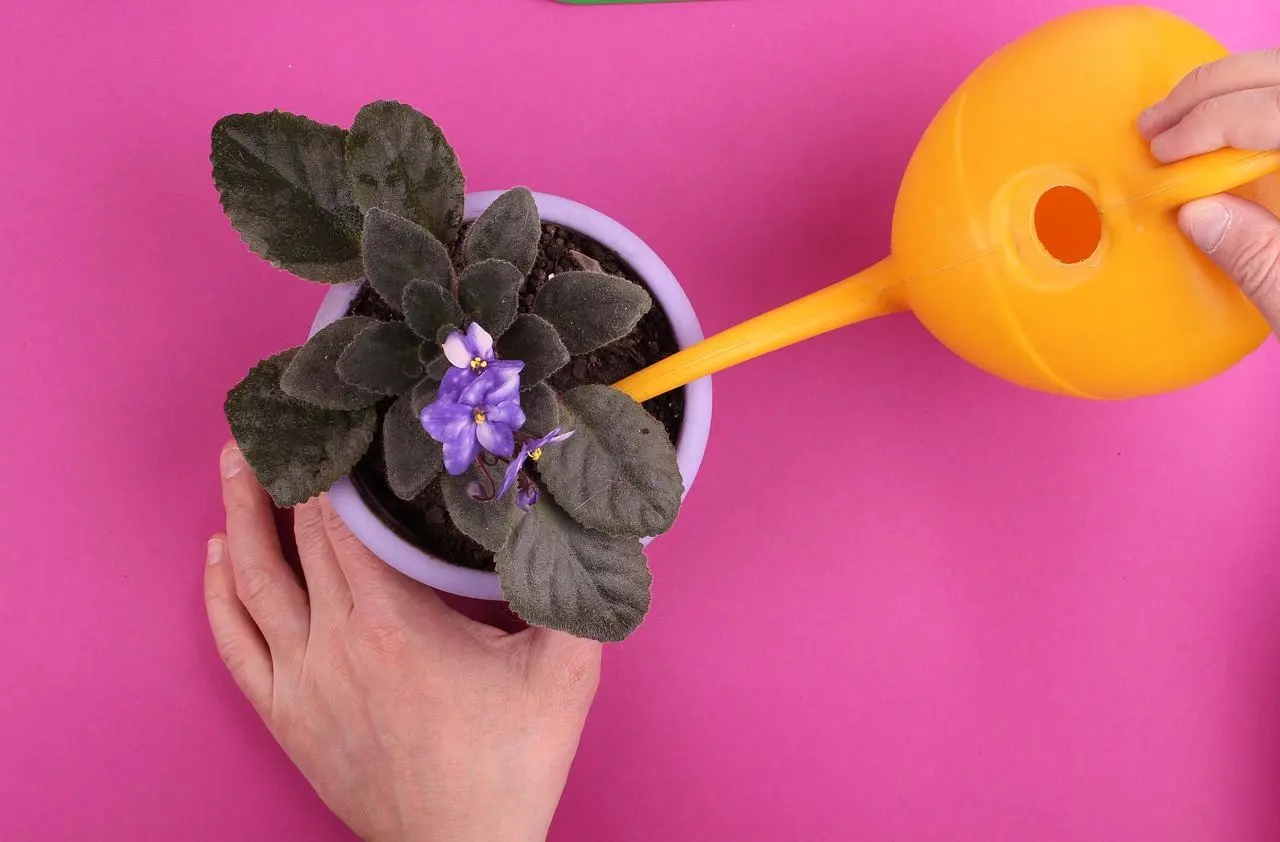
Watering from the top
- Soak the soil thoroughly until water runs out of the drainage hole.
- Let the excess drain through to the saucer.
- After an hour or so, empty the saucer so the pot never sits in standing water.
These steps follow Illinois Extension and Utah State University Extension. Both stress that the saucer must be emptied rather than left full.
Watering from the bottom
Another option is sub-irrigation. Illinois Extension suggests standing the pot in a few inches of water in a sink or a saucer. Lift it out once moisture has wicked upward and shows at the top of the soil.
Some containers do this for you. According to an Illinois Extension horticulture blog, certain sub-irrigation pots have a reservoir at the base and a float indicator that signals when more water is needed.
What makes plants dry out faster or slower
Several factors set how often a plant needs water. Illinois Extension lists these:
- Type of plant
- Temperature
- Humidity
- Light
- Pot size
- Plant size
- Potting mix
- Drainage
Light is on that list, so if you are choosing plants for a dim room, see the best houseplants for low light. Potting mix matters too, and the guide on how to improve garden soil is a good next read if you want to understand soil more broadly.
The pot itself plays a part. Plants in unglazed clay pots tend to need watering more often than those in plastic pots, because the clay is porous, says Illinois Extension.
Position changes things as well. Utah State University Extension notes that flowering plants generally need more water than foliage plants. Plants in sunlight or near heater vents also tend to dry out more quickly.
Water-absorbing polymers can be mixed into the potting mix before planting to improve water-holding capacity. Illinois Extension advises following the package directions carefully, since too much or too little gives disappointing results.
Spotting trouble and choosing the right water
Overwatering leaves clues. Utah State University Extension says root-rotting organisms may become a problem in soil that stays too wet, and fungus gnats can also point to overwatering.
The water itself counts. Use room temperature water rather than cold, and avoid softened water, advises Illinois Extension. If needed, let tap water sit at least 24 hours so chlorine and fluoride can dissipate.
Utah State University Extension takes a more relaxed view of tap water. It calls tap or well water usually satisfactory for houseplants. Soluble salts from softened water can build up in the mix, and a white-crusted surface may signal high salt levels.
The fix for salt buildup is an occasional deep rinse with non-softened water to flush the salts out.
Frequently asked questions
Can you water every houseplant once a week?
Show answer
A weekly routine only works by luck. Each pot dries at its own pace, so look at the soil first and let the plant, not the day, decide.
Should you water a plant that is wilting?
Show answer
Not automatically. Drooping leaves can come from thirst or from soggy roots, and the soil tells you which one it is.
Do clay pots need different care from plastic ones?
Show answer
Yes. Porous clay lets moisture escape through its walls, so expect to check those plants more often than ones in plastic.
Is tap water fine for houseplants?
Show answer
Usually, according to Utah State University Extension. The exception is softened water, which can leave salts behind and is best avoided.