Worried your seedlings will flop over before spring? Here is how to start seeds indoors: sow them weeks ahead of your last outdoor planting date, give them strong overhead light, and harden them off before transplanting.
This guide sits within the wider home gardening for beginners series on the site.
| Item | Value |
|---|---|
| Start seeds before outdoor planting date | 4-8 weeks |
| Daily light for seedlings | 14-16 hours |
| LED grow light distance | 8-10 inches above seedlings |
| Fluorescent light distance | 4-6 inches away |
| Maximum container depth | 2-3 inches |
| Hardening-off period | 10 days |
These figures come from UF/IFAS Gardening Solutions and Cornell Cooperative Extension Orleans County. Guidance can change, so check the sources before you rely on the numbers.
Working out your sowing date
Seed packets are written for a general audience, often by growers in very different climates, so the printed dates may not suit your garden. A custom schedule based on your own location works better, according to Cornell Cooperative Extension.
UF/IFAS suggests you aim to start seeds indoors 4-8 weeks before the suggested outdoor planting dates. For larger plants such as watermelon, squash and pumpkin, you might transplant in as little as four weeks, as UF/IFAS Gardening Solutions explains.
To build your schedule, work through these steps:
- Find your average last frost date.
- Check how long each variety needs to grow indoors before transplanting.
- Leave time at the end for hardening off.
- Think about your microclimate, such as a low spot where frost lingers.
If you are new to this, you can stagger sowings at two-week intervals. You may waste a few seeds, but UF/IFAS notes it gives you a margin for error and lets you add transplants to the garden a few at a time.
Lighting for starting seeds indoors
You can start seeds on a windowsill, but the light is often the weak point. Only south- or west-facing windows are bright enough, and the light is directional, so seedlings bend toward it. You will need to rotate trays 180 degrees every couple days, as UF/IFAS advises.
In short late-winter days, even a sunny window can give light that is too weak to grow compact, sturdy seedlings, according to Cornell Cooperative Extension. The usual result is tall, pale, spindly plants. For a large tray count, an overhead light is the practical choice.
Here is what to check when you set up a light:
- Spectrum: choose full-spectrum or blue-green grow lights, ideally ones sold for seed starting.
- Distance for LEDs: keep them 8-10 inches above seedlings (Cornell).
- Distance for fluorescents: keep them 4-6 inches away, and raise the light as plants grow (Cornell).
- Hours: seedlings need 14-16 hours of light per day, so an outlet timer saves effort (Cornell).
Both types can work. LEDs cost more upfront but last 5+ years and run cooler, while fluorescents are cheaper at first but need replacing every 1-2 years, according to Cornell Cooperative Extension. Follow the manufacturer’s instructions for any electrical fixture and timer you plug in.
Containers, soil and water
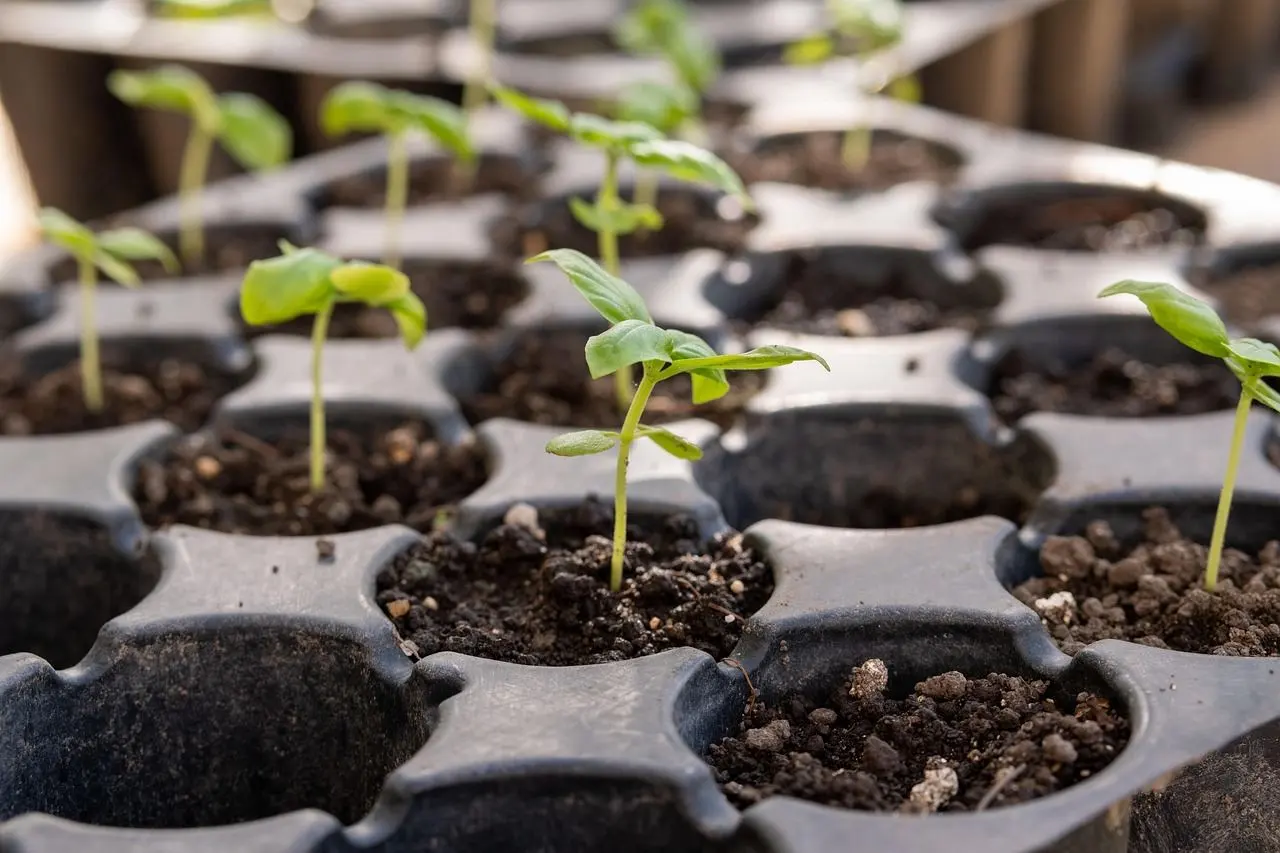
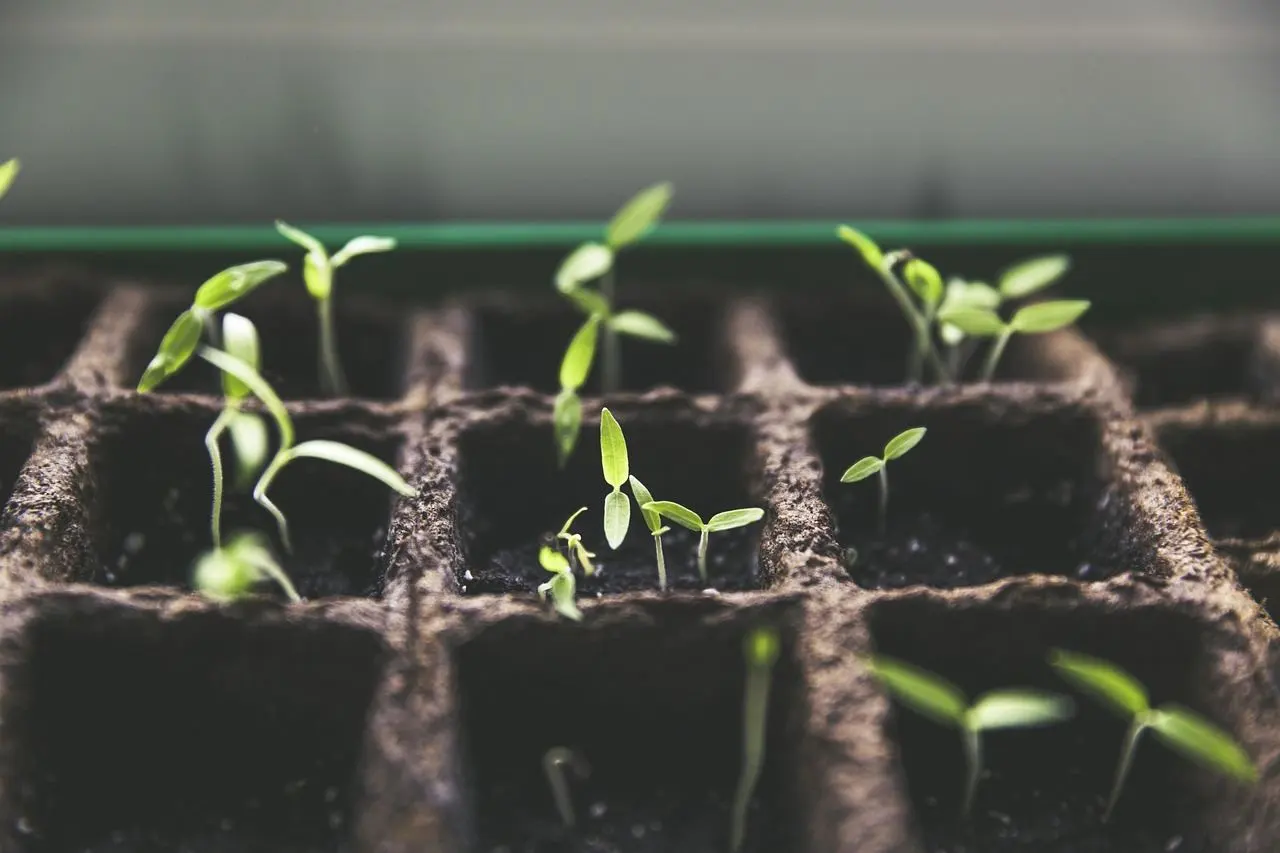
Choose shallow containers: UF/IFAS says not more than 2-3 inches deep, because deeper ones are hard to keep evenly moist without staying soaked. In cell packs, sow 2-3 seeds per cell and thin later, keeping only the healthiest seedling. You can reuse plastic cell packs for a couple of seasons if you disinfect them between uses.
A light, fine-textured seed-starting mix is best, though regular potting soil is a common cheaper choice. Avoid mixes labeled “garden soil,” “top soil” or “raised bed soil,” which are usually too heavy. Never use backyard soil, because it is full of weed seeds.
If you are building soil for the beds your seedlings will join, the guide on how to make compost at home covers that side of the work.
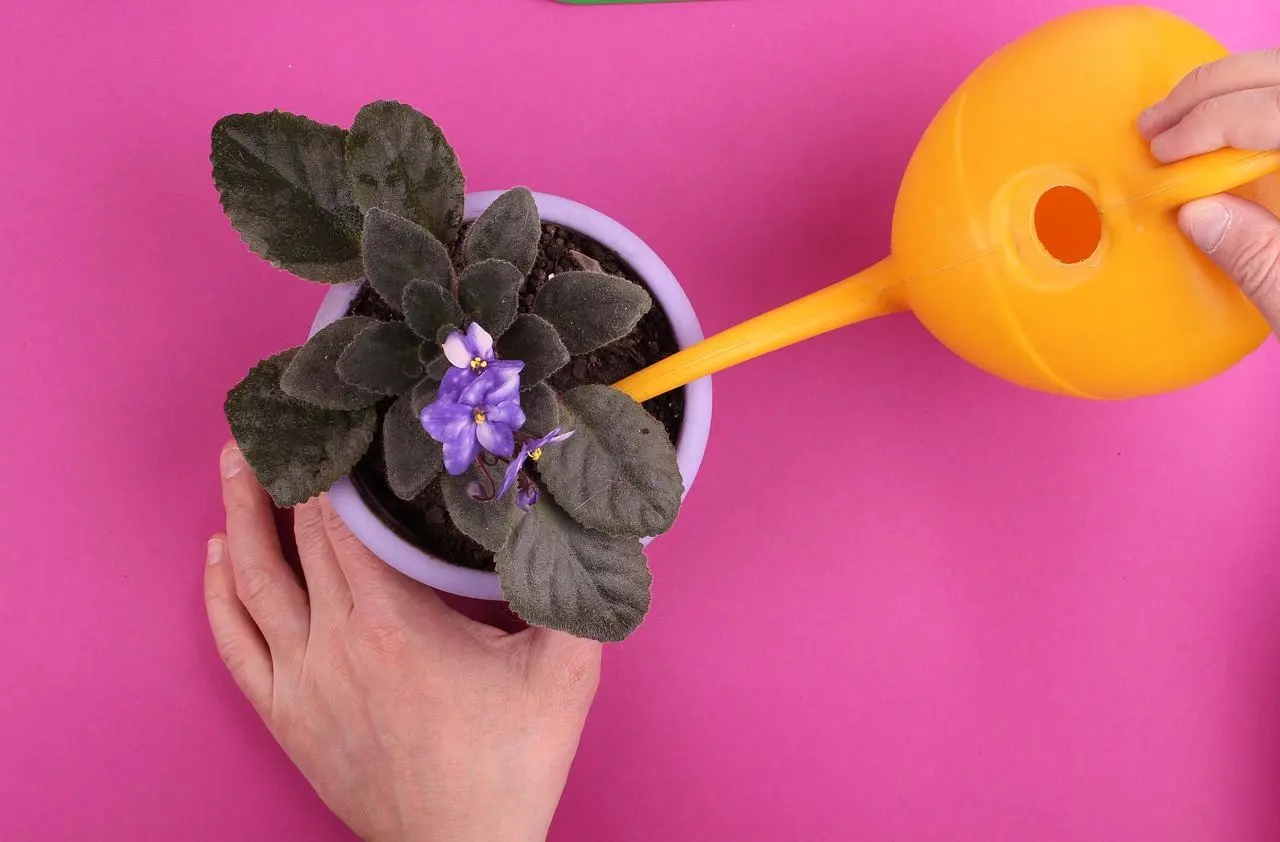
Watering well may be the most important step. Keep the mix evenly moist, never soggy and never completely dry, and check it every morning. You can water from beneath by filling the tray, which is a little more work but keeps moisture more uniform.
Until seedlings have a second set of leaves, clear plastic over the containers works as a mini greenhouse. Once true leaves appear, remove the cover and add a small fan so air moves gently across the plants, as UF/IFAS recommends.
Fixing common seedling problems
Most seedling troubles have a clear cause. The table below matches symptoms to the likeliest explanation.
| Symptom | Likely cause |
|---|---|
| Spindly, stretched growth | Not enough light |
| Stunted growth, normal color | Low fertility |
| Stunted growth, yellow leaves | Nitrogen deficiency |
| Stunted growth, purple leaves | Phosphorus deficiency |
| Stems rotting at the soil line | Damping off, a fungal disease |
| Green algae or moss on the soil | Too much moisture |
The pairings come from the Cornell Cooperative Extension troubleshooting guide, which says damping off is most often caused by too much moisture and poor air circulation. Check the source before relying on it.
For stretched seedlings, move the light closer or add hours. Yellowing leaves and slow growth can also signal a nutrient shortage, and UF/IFAS suggests asking your county Extension office about specific crops.
Hardening off and transplanting
After weeks of careful work, it is tempting to rush plants outside. Don’t: moving seedlings straight into wind, direct sun and changing temperatures can set them back for weeks or kill them. Hardening off prevents that shock.
The Cornell workbook recommends a 10-day hardening-off process. Start with 1-2 hours outside in a sheltered, partially shaded spot, then increase the time and sun each day.
If seedlings outgrow their first containers before planting time, you can move them into larger pots. UF/IFAS advises against very large pots, since big transplants are hard to care for indoors and the longer they stay inside the more feeding they need.
Plants headed for pots instead of beds are covered in the guide to balcony container gardening.
Frequently asked questions
Can I grow seedlings on a windowsill alone?
Show answer
It can work for a handful of plants in a bright south- or west-facing window. Expect to turn the trays often, and add a lamp if the stems start stretching.
How much light do seedlings need each day?
Show answer
Plan on a daily light period of 14-16 hours, and let an outlet timer handle switching, per Cornell Cooperative Extension.
Can I fill trays with soil from my garden?
Show answer
No. Garden dirt tends to be heavy and carries weed seeds, so you may wait weeks to tell weeds from vegetables. A potting mix or seed-starting mix is the safer choice.
Can I reuse my seed trays?
Show answer
Yes, plastic cell packs can serve a couple of seasons in a row. Disinfect them between uses, as UF/IFAS notes.