Short on floor space and feeling boxed in? Learning how to decorate a small bedroom comes down to light colors, upward lines, mirrors and storage that stays off the floor. Start with those.
If you want the wider picture, start with our guide to interior design basics, which covers the principles behind these tips.
| Item | Value |
|---|---|
| Steps in This Old House’s guide to making a small bedroom look bigger | 5 steps |
| Ways in the same guide to make a space look larger and more organized | 12 ways |
| Organizing tips for a small bedroom in that guide | 7 tips |
| Small-space problem-solvers in the Houzz piece republished by TODAY | seven problem-solvers |
| Paint advice from color consultant Doty Horn | Same color on walls and ceilings |
These figures come from This Old House and TODAY. Guides get updated, so check the sources before you rely on them.
Use color to blur the edges of the room
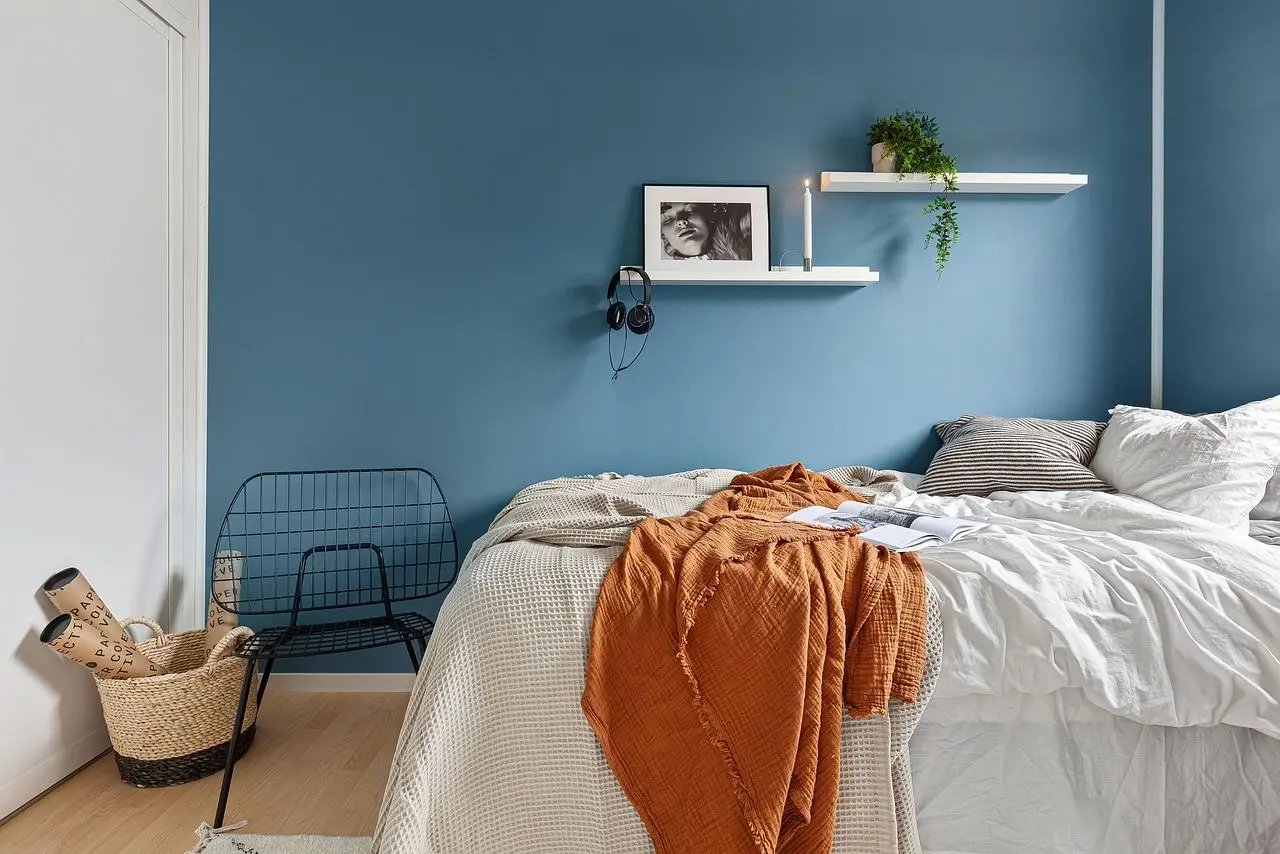
Color changes how spacious a room feels. This Old House notes that light, monochromatic color schemes can make small spaces appear larger, while softer shades of blue, green or lavender give a calm, open mood (source).
Color consultant Doty Horn advises painting walls and ceilings the same color, because it lets your eye travel around the room without stopping. If you keep a white ceiling, the same guide suggests painting baseboards and trim to match the walls for a continuous flow.
Our guide on how to choose a color palette for your home helps you pick shades that suit your light and the rest of the house.
- Match the curtains and headboard to the wall color for a cohesive look.
- Add contrast through throw pillows, artwork or a rug so the room does not feel sterile.
- Consider laying wood planks on a diagonal; designer Beth Bynon says this visually widens the room.
Draw the eye upward
Vertical space is the key to a small bedroom that feels larger, according to This Old House. Install shelves high on the walls, above doorways or along the ceiling line, and hang artwork a little higher than usual.
Curtains help too. Floor-to-ceiling panels can make the ceiling appear taller than short drapes or blinds do. A tall, narrow bookcase adds storage without crowding the room.
Houzz, in a piece republished by TODAY, goes a step further and suggests hanging drapery from the ceiling rather than just above the window. Its length and vertical lines make the room feel larger.
Layer the lighting
A room with little daylight needs layered artificial lighting, says This Old House. A statement ceiling fixture draws the eye up, and wall sconces plus table or floor lamps remove dark corners and add warmth.
Houzz suggests swapping bedside table lamps for hanging pendants, which frees the surface below and creates a vertical line (TODAY). That is a handy trade when your nightstand is barely wider than a book.
For daytime, sheer curtains let light in while keeping privacy. If you need blackout curtains to sleep, layer them over the sheers so you can adjust the light easily. Our walkthrough on how to layer lighting in a room covers the layers in more detail.
Any new wiring or hardwired fixture should follow the manufacturer’s instructions and be installed by a qualified electrician.
Add mirrors and see-through pieces
Mirrors make a room look larger by reflecting its space, and they bounce light around too (This Old House). A large floor-length mirror does this and also works for dressing.
Hunker suggests covering a whole wall with a wardrobe mirror, or hanging wall mirrors in place of art if you lack the wall space (Hunker).
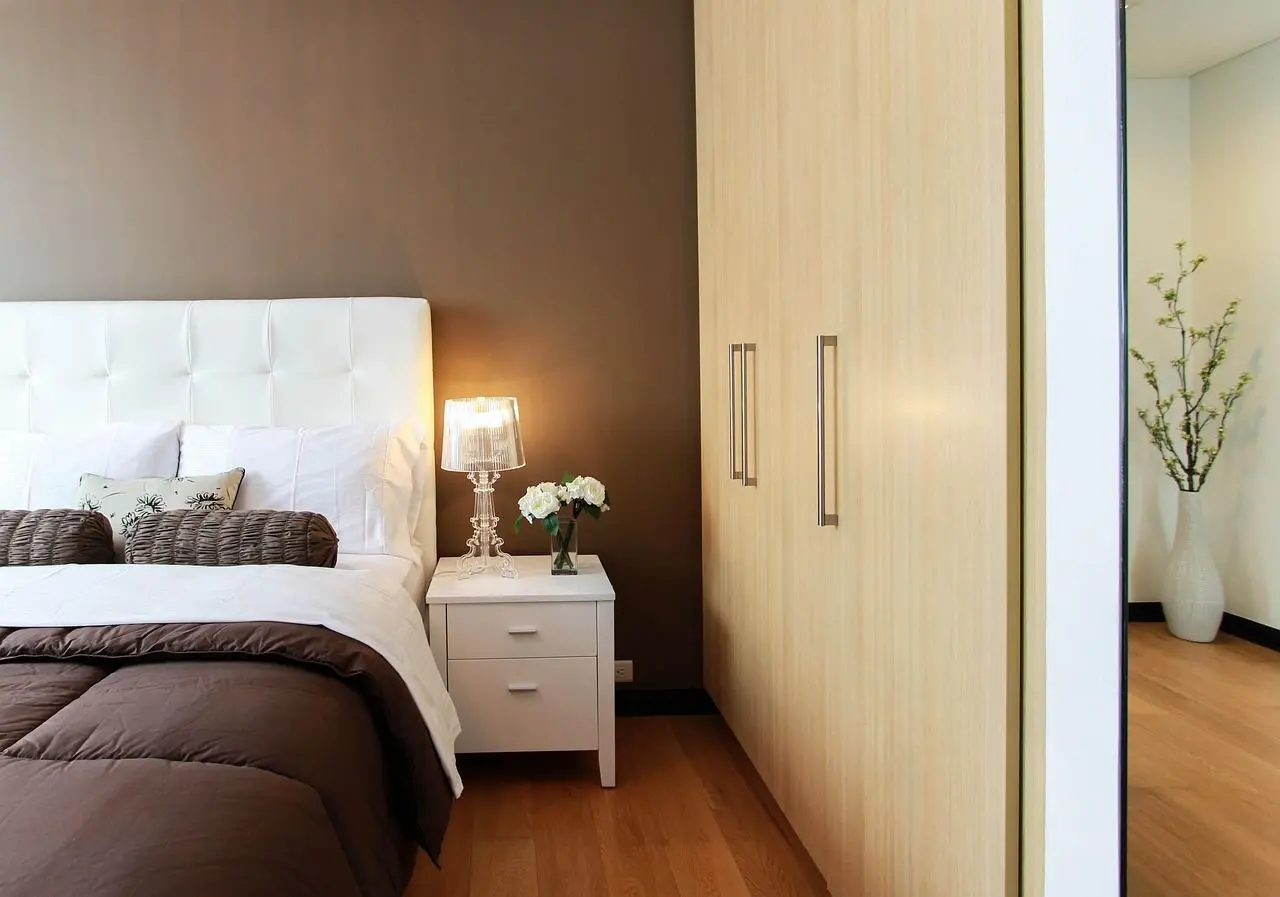
Clear furniture keeps sight lines open. This Old House suggests lucite or glass for shelving units and bedside tables, and frosted glass in place of solid wooden doors. Hunker adds a caution: acrylic works when used in moderation.
Save floor space with smarter storage
An organized room feels larger, so start by decluttering, as This Old House advises in its organizing tips. Then move what you keep off the floor.
- Use the space under the bed; designers often recommend it, along with built-in pieces (TODAY).
- Float bedside tables or small dressers on the wall, leaving room beneath for shoes or baskets.
- Swap a nightstand for a smaller bedside table, which Hunker says looks more minimalist.
Before you mount anything, make sure the wall can carry the weight and that you use the right supports and anchors. If you are not hiring a contractor, consult a qualified professional first.
Decorate without using any floor at all
Some of the best small-room decor takes up no space. Hunker points to a subtle wallpaper pattern, which adds charm without taking up any space, and to a gallery wall that shows off the room’s personality the same way (Hunker).
Your bed is another place for decor. Hunker’s advice is to keep two plain pillows for sleeping and arrange mismatched throw pillows on top during the day.
Frequently asked questions
Does paint color really make a small bedroom look bigger?
Show answer
Pale, single-tone schemes tend to help most. Carrying the wall color onto the ceiling and trim removes the hard lines that make walls feel close.
Where is the best place for a mirror in a tiny bedroom?
Show answer
Facing a window is a good start, since it reflects daylight and can look like an extra window. A mirrored closet door or a tall leaning mirror also doubles as a dressing aid.
How can I get storage without crowding the floor?
Show answer
Go up and under: high shelves, a slim tall bookcase, and containers beneath the bed. Wall-mounted bedside tables free the ground below them.
Can I mount furniture to the wall myself?
Show answer
Only if you know what the wall is made of and what the piece weighs. When in doubt, ask a qualified professional, and follow the fixings manufacturer’s instructions.